Would you recognize an animal?
Would you recognize an animal?
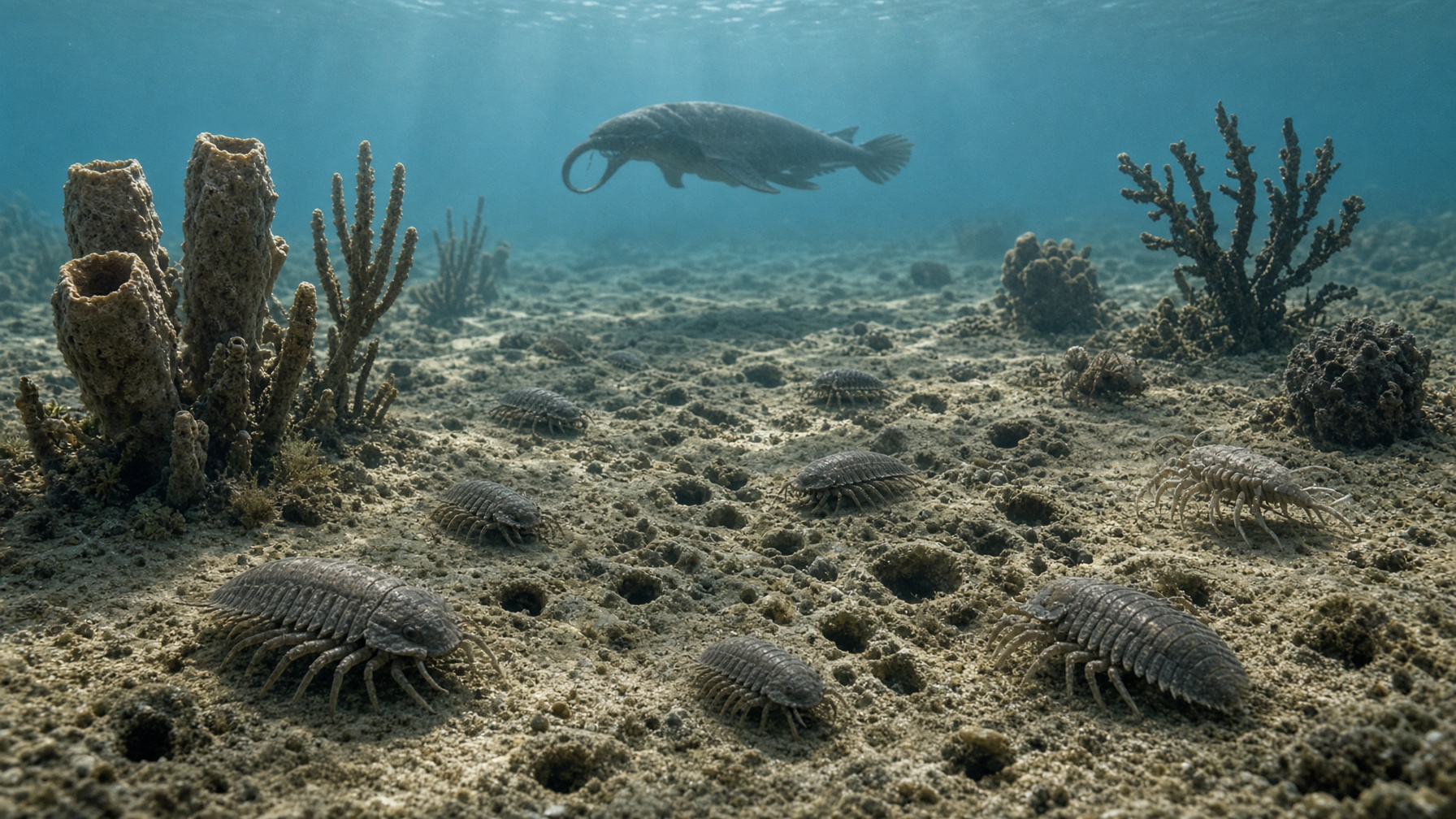
Cambrian, about 510 million years ago · Shallow seas on a world without grass or trees · Drawing. Not a photograph.
Generated interpretation of a Cambrian shelf sea. Body plans are based on fossils; color and motion are inferred.
First look
Would you recognize an animal?
Wonder. Then look. This is not a test.
Eyes. Shells. Burrows. Predators. Prey.
The animals are real in outline. Their colors are not photographs.
Land above water would look empty of forests as you know them.
First look is enough. Keep looking is if you want more.
Fossil | World
Trilobite
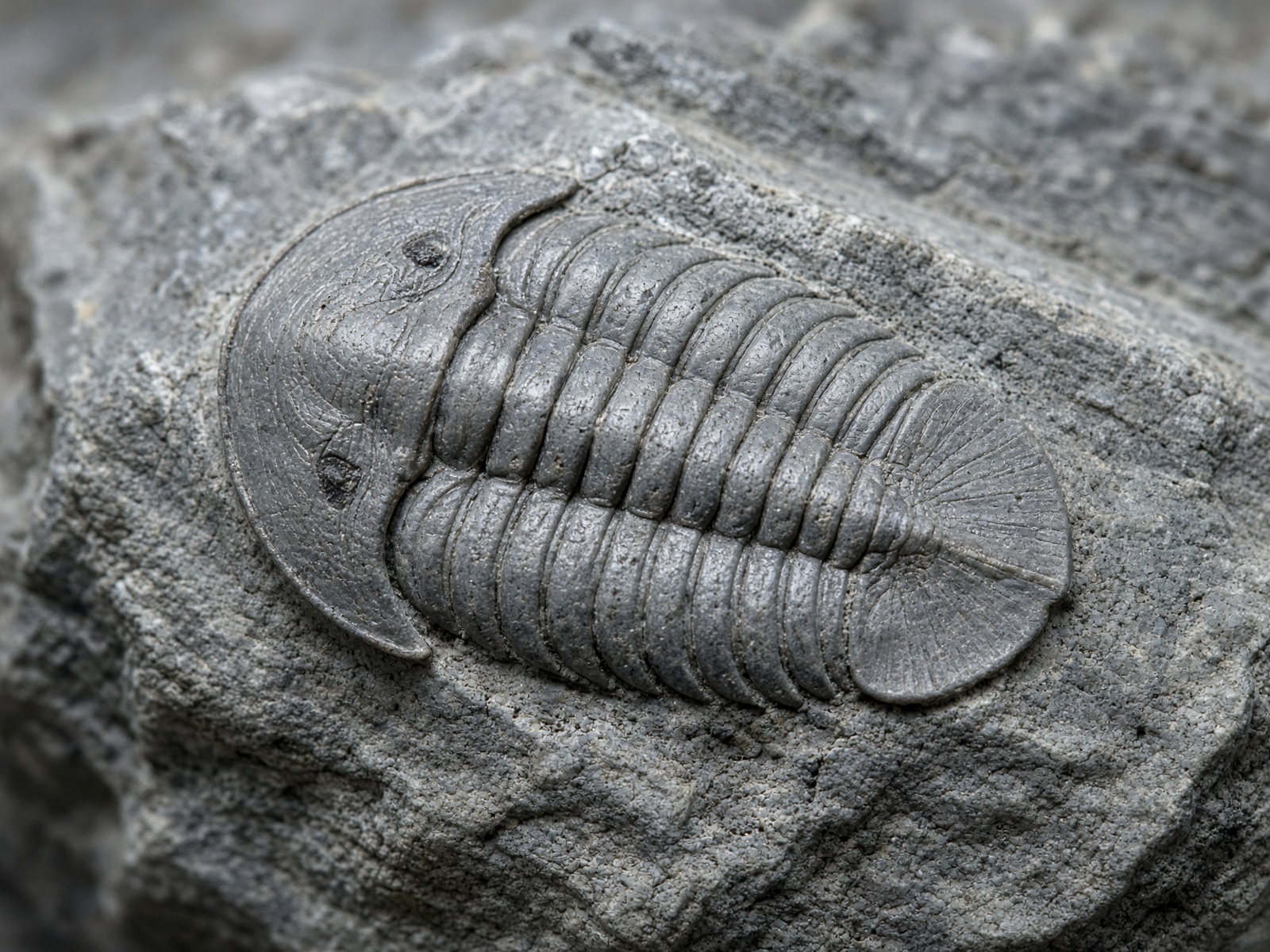
What survives
Drawing. Not a photograph.
What we reconstruct
Drawing. Not a photograph.
What the fossil tells us
A segmented marine arthropod. Eyes in some species. It walked on a seafloor we can still find as rock.
What we reconstructed
We reconstruct a living animal on a Cambrian or later Paleozoic shelf, with legs and gills inferred from rare soft-tissue fossils.
Still uncertain
Color, behavior, and sound are not in the shell.
Keep looking
How would we know? Open only if you want the evidence.
Keep looking · Not a sudden magic trick
The Cambrian explosion is a radiation of animal body plans in the rock record. Earlier animals existed. The Ediacaran holds other, still-puzzling forms. Complexity has a long fuse.