Source folio
What survives
Fossil | World
Trilobite
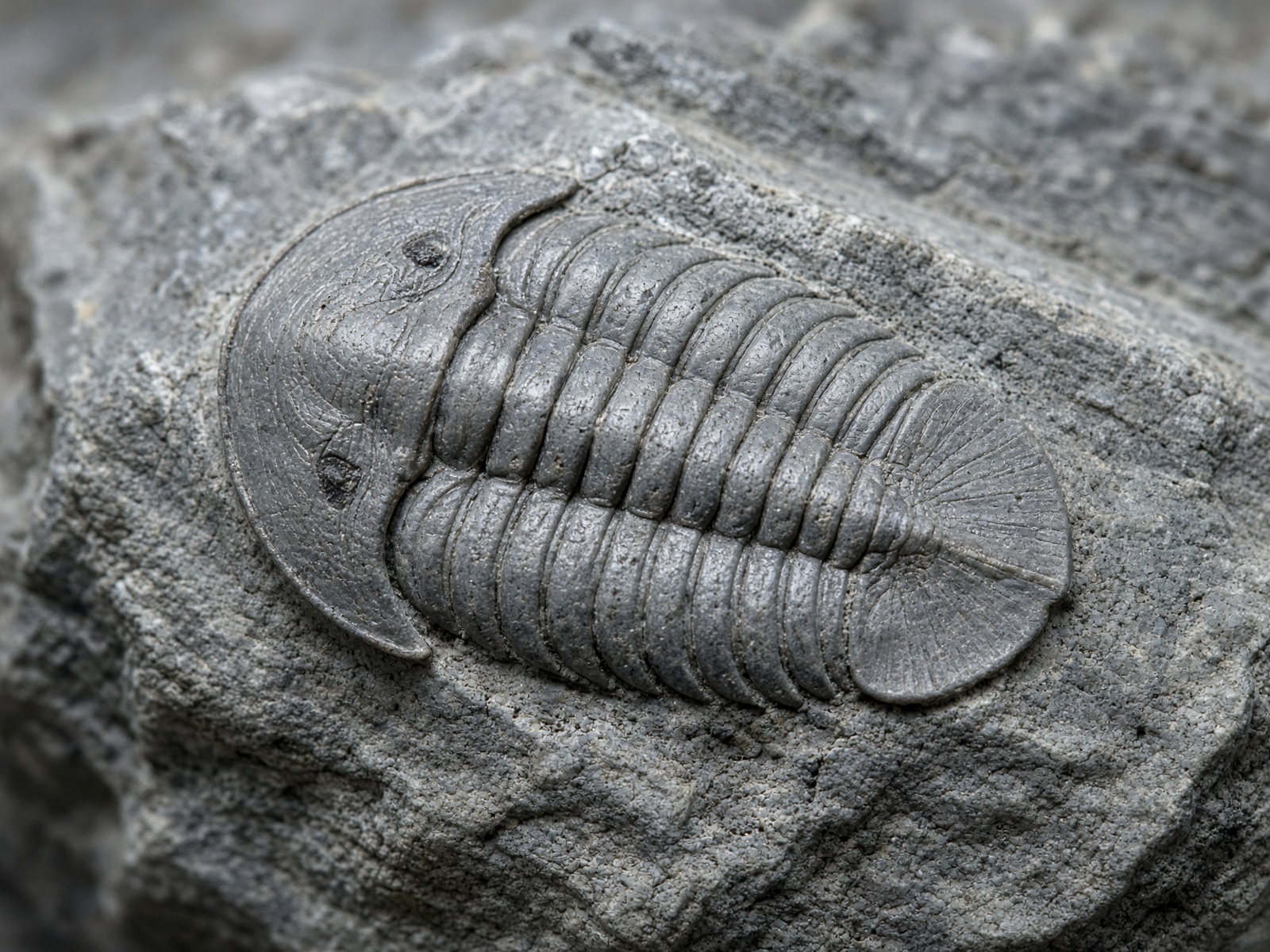
What survives
Drawing. Not a photograph.
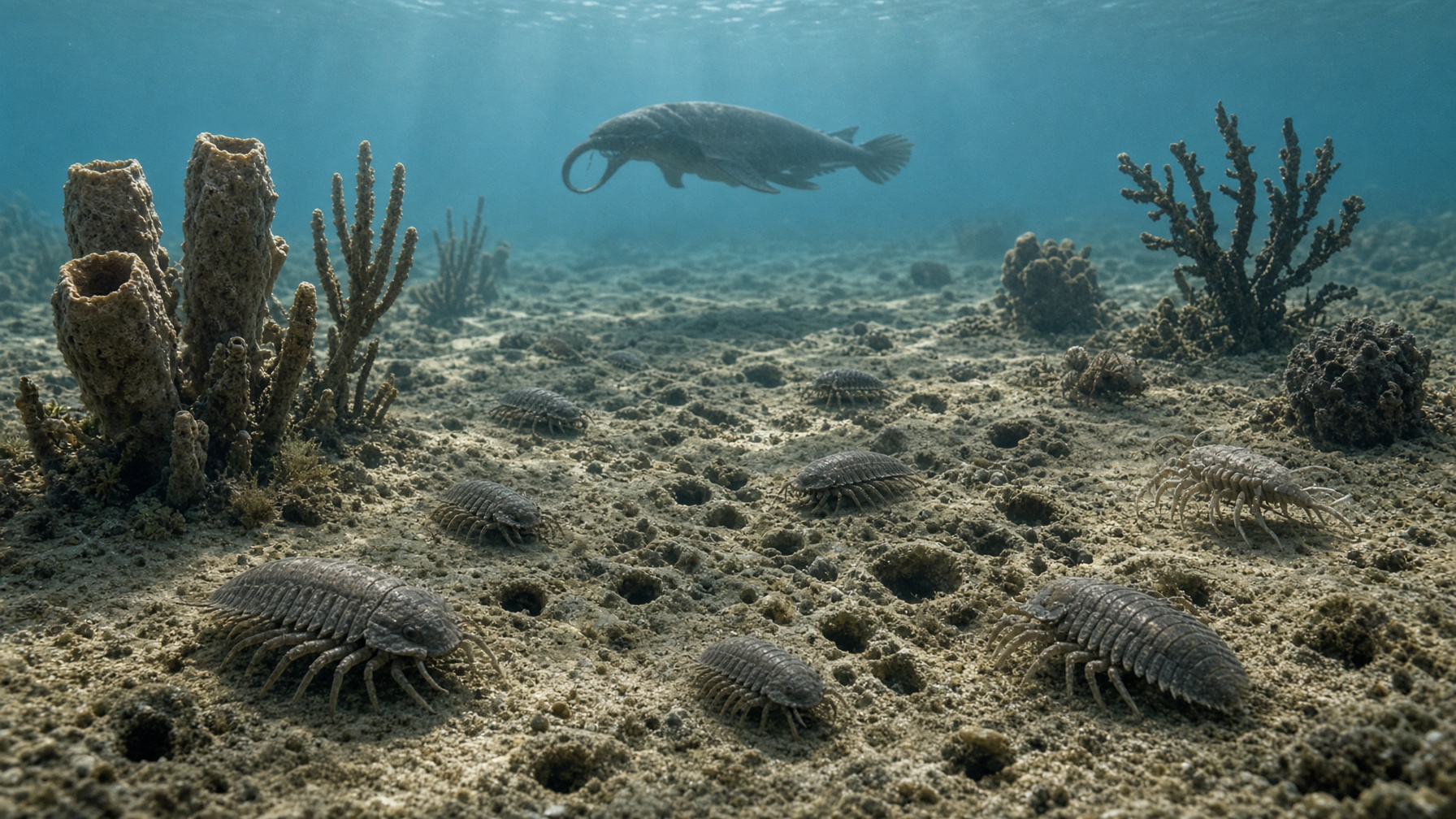
What we reconstruct
Drawing. Not a photograph.
What the fossil tells us
A segmented marine arthropod. Eyes in some species. It walked on a seafloor we can still find as rock.
What we reconstructed
We reconstruct a living animal on a Cambrian or later Paleozoic shelf, with legs and gills inferred from rare soft-tissue fossils.
Still uncertain
Color, behavior, and sound are not in the shell.
Fossil | World
Ammonite
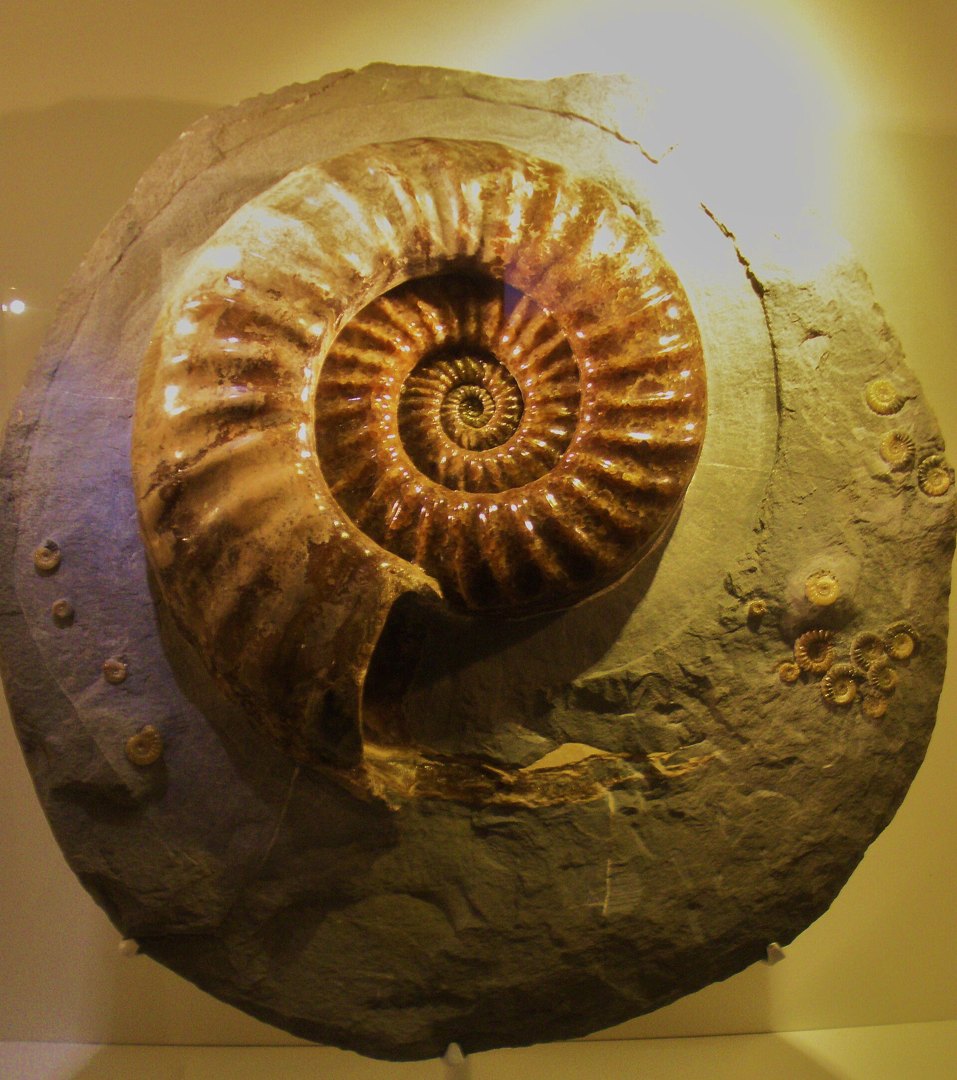
What survives
Real observation
Photograph of a real ammonite fossil. Wikimedia Commons.
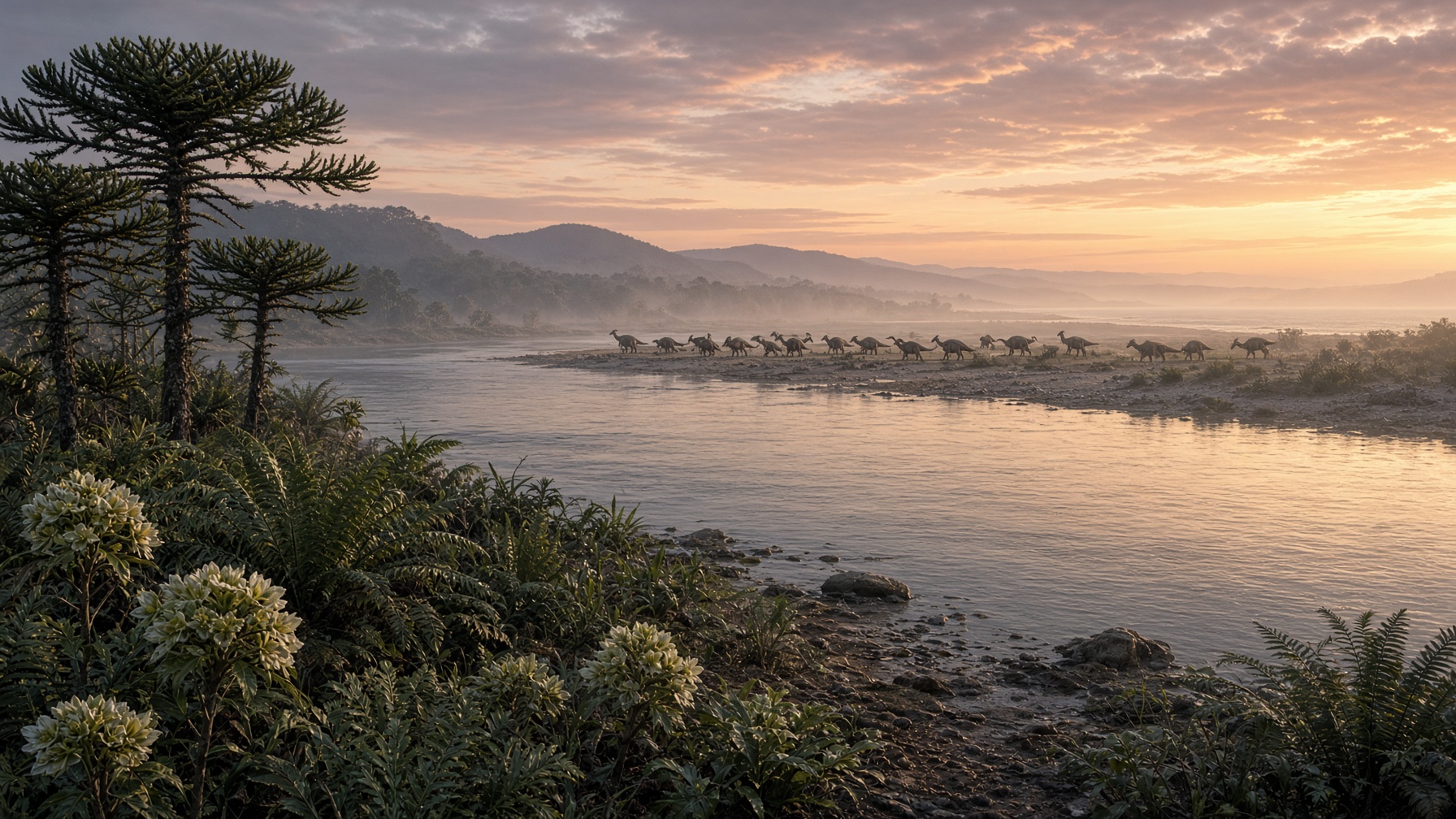
What we reconstruct
Drawing. Not a photograph.
What the fossil tells us
A coiled shell of a swimming cephalopod. Chambers. A record of Mesozoic seas.
What we reconstructed
We reconstruct a living animal in open water, related to squid and nautilus, gone at the K-Pg boundary.
Still uncertain
Soft body shape and color pattern are inferred, not photographed.
- Dates in deep time often have uncertainty. A number like ~66 million is a current estimate, not a birthday.
- Some boundaries are defined by a golden spike in rock. Many biological changes happened over long intervals.
- Reconstructions are models. Color, sound, and soft tissue are usually inferred.
- A map of the past is a model, not a surveyed coast.
- First life remains a question. We publish the oldest evidence we can defend, and we mark the rest as contested.