How can a rock have an age?
How can we know what Earth was like so long ago?
this year · Outcrop, lab, museum · Drawing. Not a photograph.
Generated interpretation of a museum specimen. Not a photograph of a specific catalogued fossil.
First look
How can we know what Earth was like so long ago?
Wonder. Then look. This is not a test.
Strata stack in time. Fossils change through the stack.
Some minerals clock the decay of radioactive elements.
Magnetic minerals remember the field when they cooled.
None of this is a guess in the dark. It is also not magic.
First look is enough. Keep looking is if you want more.
Fossil | World
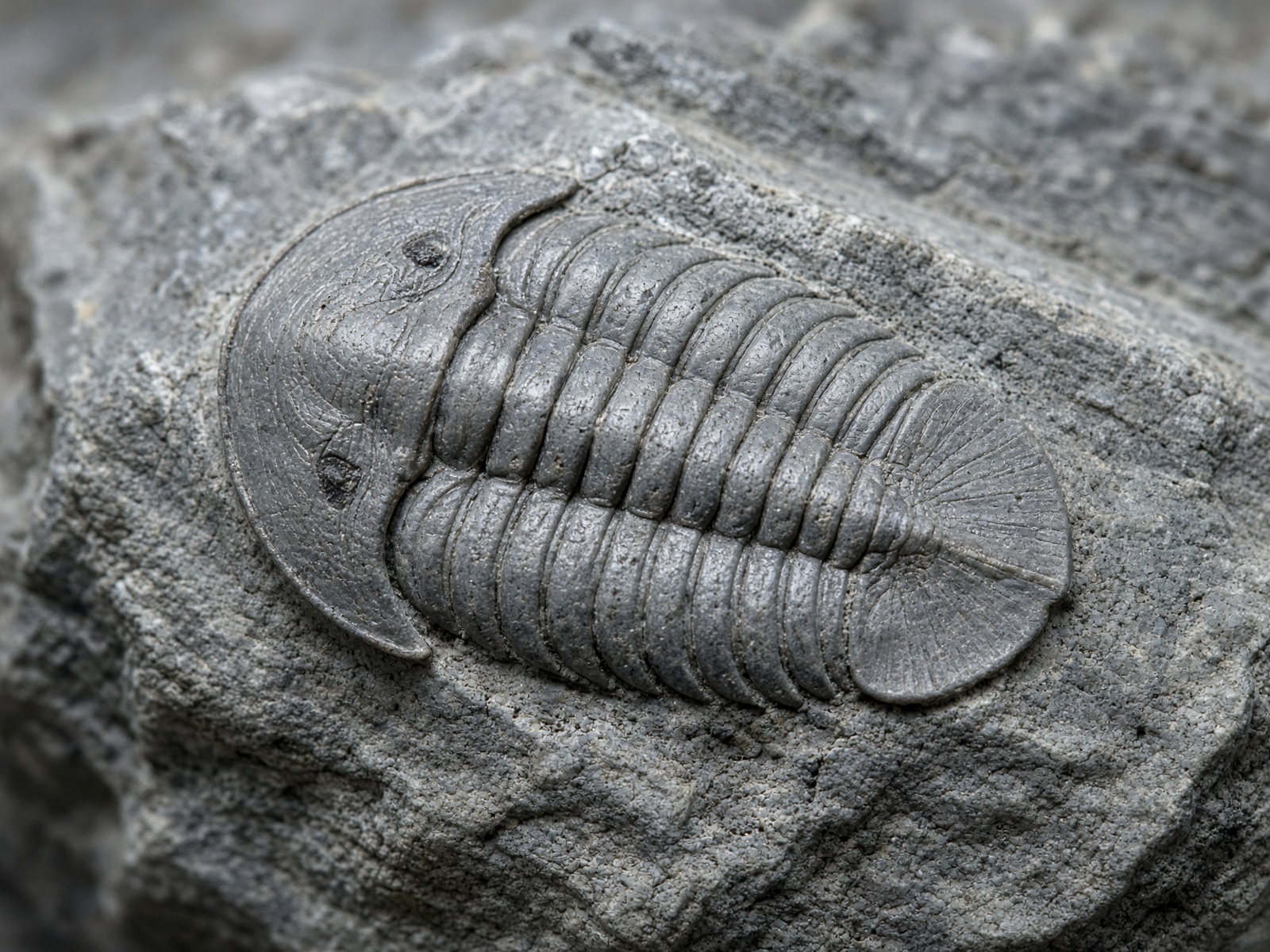
Trilobite
What survives
Drawing. Not a photograph.
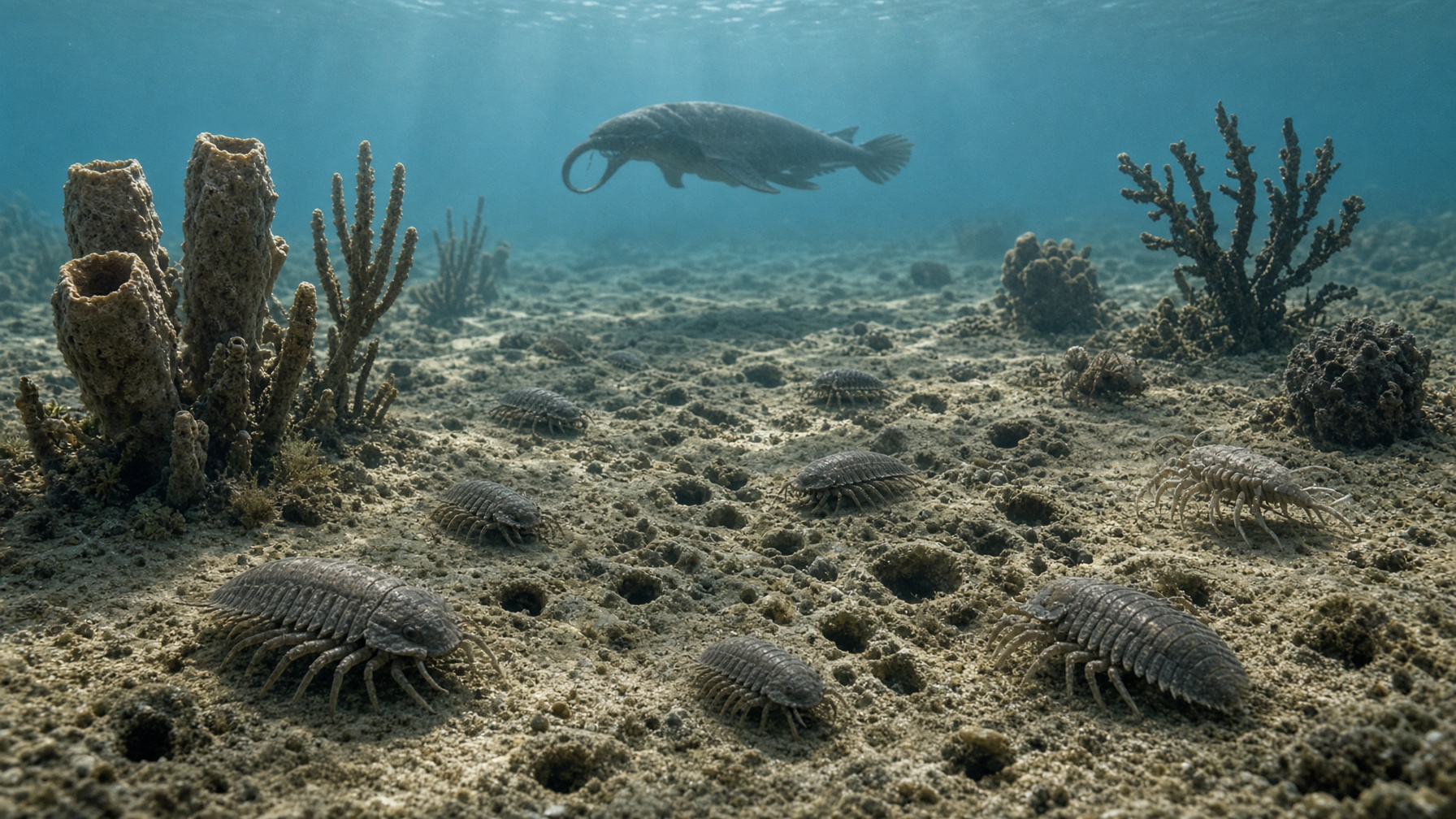
What we reconstruct
Drawing. Not a photograph.
What the fossil tells us
A segmented marine arthropod. Eyes in some species. It walked on a seafloor we can still find as rock.
What we reconstructed
We reconstruct a living animal on a Cambrian or later Paleozoic shelf, with legs and gills inferred from rare soft-tissue fossils.
Still uncertain
Color, behavior, and sound are not in the shell.
Fossil | World
Ammonite
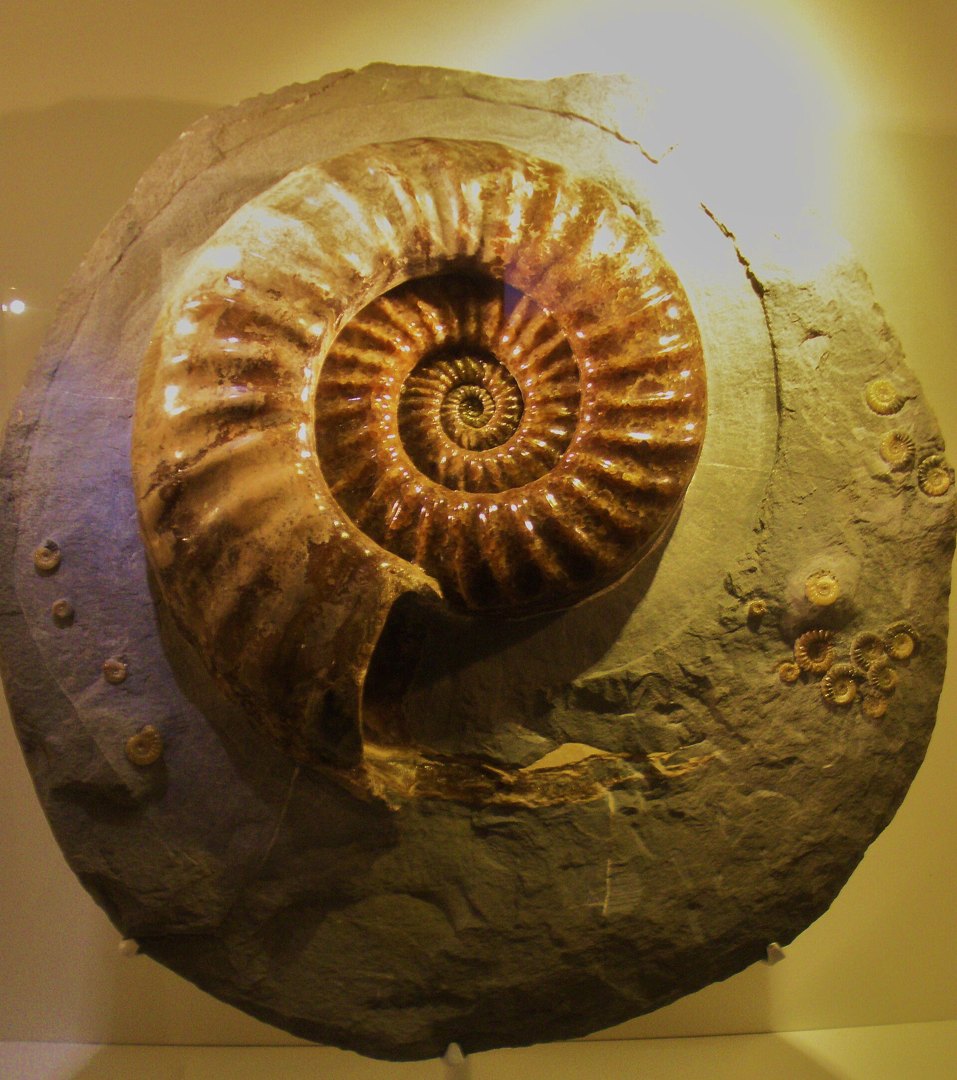
What survives
Real observation
Photograph of a real ammonite fossil. Wikimedia Commons.

What we reconstruct
Drawing. Not a photograph.
What the fossil tells us
A coiled shell of a swimming cephalopod. Chambers. A record of Mesozoic seas.
What we reconstructed
We reconstruct a living animal in open water, related to squid and nautilus, gone at the K-Pg boundary.
Still uncertain
Soft body shape and color pattern are inferred, not photographed.
How the clocks work
Strata
Younger rock usually sits on older rock. The stack is a clock with chapters.
Fossils
Life changes through the stack. The order of fossils is a second clock.
Radiometric ages
Some crystals hold parent and daughter atoms. Their ratio is a clock we can read in a lab.
Keep looking
How would we know? Open only if you want the evidence.
Keep looking · Sister door
Another project in this collection, How Do We Know?, teaches evidence more broadly. This room only answers the deep-time version of the question.