Ice is a visitor
Was there only one ice age?
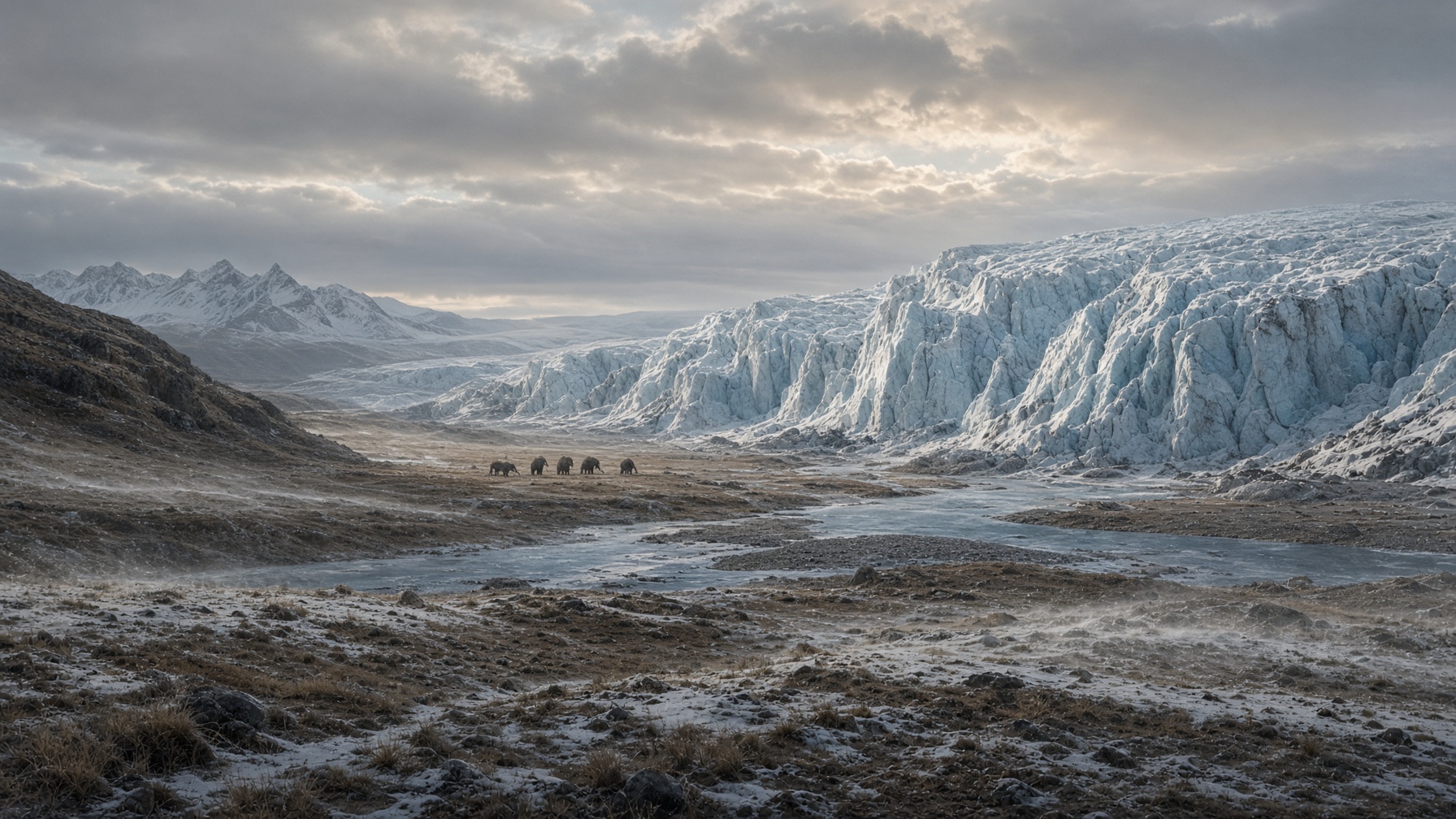
last glacial maximum ~21,000 years ago · High latitudes and high mountains, and the air everywhere · Drawing. Not a photograph.
Generated interpretation of a glacial landscape. Ice did not cover the whole planet in the Pleistocene.
First look
Was there only one ice age?
Wonder. Then look. This is not a test.
Ice came more than once. It was not one forever winter.
We live in a warm time now. It began about 11,700 years ago.
Ice can grow and melt without anyone here to watch.
First look is enough. Keep looking is if you want more.
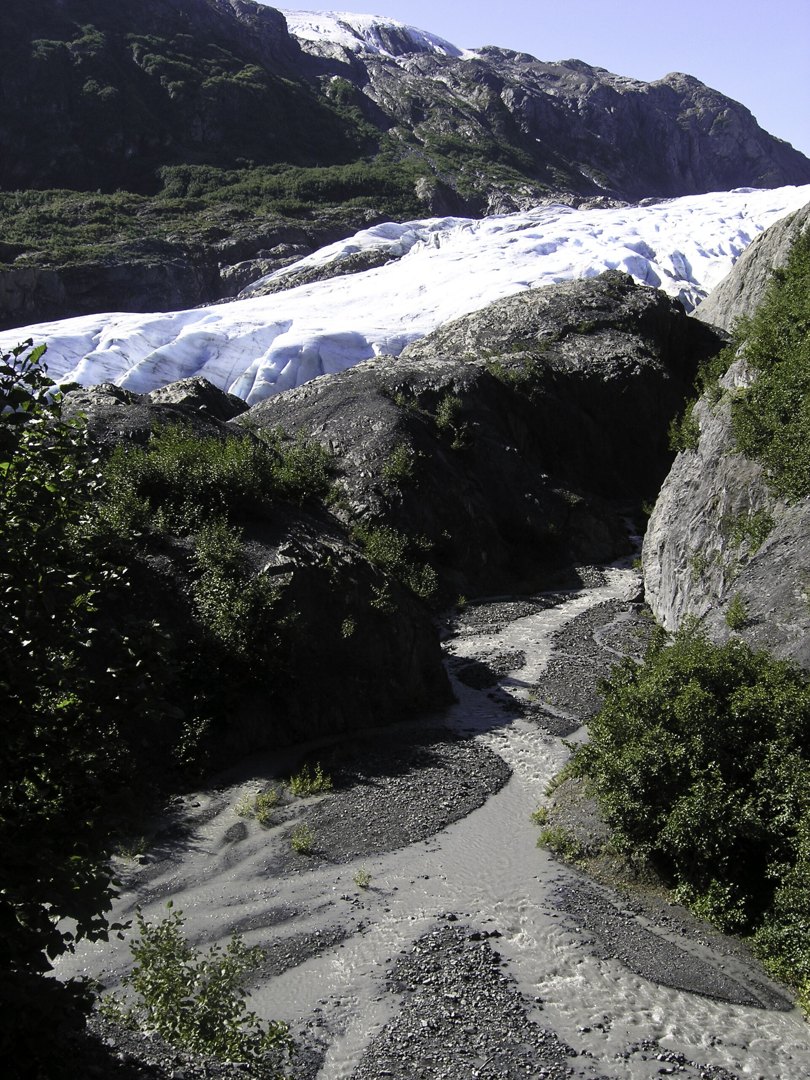
A glacier you can photograph. A Pleistocene valley you cannot.
Photograph
Real observation
Exit Glacier, Alaska. U.S. National Park Service. Public domain.
Drawing of then
Drawing. Not a photograph.
The year comes from ice cores and moraines. This picture is a drawing.
Keep looking
How would we know? Open only if you want the evidence.
Keep looking · Why the ice returns
Earth’s orbit and tilt change slowly. Those changes shift sunlight. Greenhouse gases, ice itself, and ocean currents then amplify the swing. The last 11,700 years are called the Holocene. The longer ice-and-thaw chapter is the Pleistocene. The first fact is simpler: ice is not a single ancient event.
Keep looking · Not Snowball Earth
Much older glaciations in the Cryogenian may have covered far more of the planet. That is a different story, with its own evidence and its own uncertainty.