Something enormous happened
How do we know?
66.00 million years ago (K-Pg boundary) · Everywhere. Evidence first seen in rock · Drawing. Not a photograph.
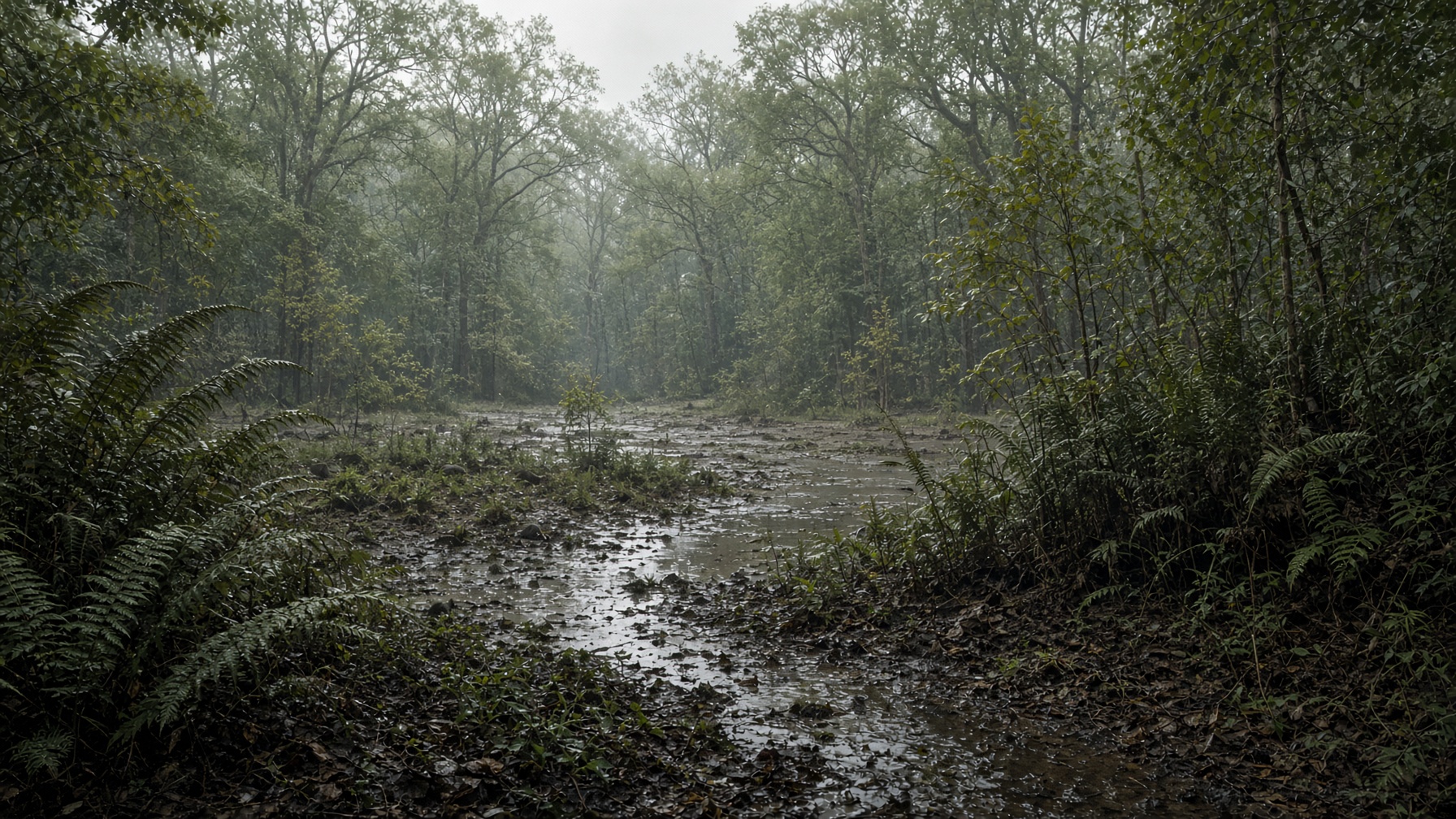
Generated interpretation of a world after the K-Pg extinction. Not a disaster film. Recovery is slow.
First look
How do we know?
Wonder. Then look. This is not a test.
Begin with an ordinary Cretaceous ecosystem. Then the rock changes.
A thin clay holds iridium, shocked quartz, and the dust of a bad day.
Many lineages disappeared. Some survived. Ecosystems reorganized.
Mass extinction is not the same as everything died.
First look is enough. Keep looking is if you want more.
Time field
Mass extinction is not everything died
End-Ordovician
~444 million years ago
Climate swung through glaciation. Sea levels dropped, then rose. Shallow marine worlds shrank.
Evidence: Fossil turnover in marine rocks; glacial deposits; chemical shifts in the oceans.
Disappeared. Many trilobites, graptolites, and brachiopods.
Survived. Marine lineages continued. Life did not end.
Recovery. Millions of years. Not a season.
Late Devonian
~372 million years ago
Reef systems collapsed in pulses. Oxygen in some seas fell. The crisis was an interval, not one night.
Evidence: Reef gaps; black shales; geochemical markers spread through several stages.
Disappeared. Many reef-builders and some early fish groups.
Survived. Other fishes, plants on land, and arthropods.
Recovery. Pulses over millions of years.
End-Permian
~252 million years ago
The largest known mass extinction. Volcanism in Siberia, greenhouse climate, ocean chemistry in crisis.
Evidence: Siberian Traps; carbon-isotope swings; a thin crisis interval in marine sections worldwide.
Disappeared. Most marine species; many land plants and animals, including most synapsid groups.
Survived. A few lineages on land and in the sea. Some became ancestors of later groups.
Recovery. On the order of millions of years for ecosystems to reorganize.
End-Triassic
~201 million years ago
Central Atlantic magmatic province. Climate and oceans shifted as Pangaea began to rift.
Evidence: CAMP basalts; carbon-isotope excursions; fossil turnover at the Triassic to Jurassic boundary.
Disappeared. Many large amphibians, some early crocodile-relatives, and several marine groups.
Survived. Dinosaurs, which then became more widespread in Jurassic ecosystems.
Recovery. Hundreds of thousands to millions of years.
End-Cretaceous (K-Pg)
66.00 million years ago
An asteroid struck what is now the Yucatán. Dust, darkness, cooling, then a changed world. Volcanism in India is also part of the story scientists still weigh.
Evidence: Chicxulub crater; iridium-rich boundary clay; shocked quartz; fern-spike; sudden fossil turnover.
Disappeared. Non-bird dinosaurs, pterosaurs, ammonites, many marine reptiles, and many plants.
Survived. Birds, mammals, crocodilians, turtles, some fishes, and many plants. Survival is not a prize. It is a fact.
Recovery. Local plants returned in thousands of years. Ecosystems took much longer. Diversity took millions.
Fossil | World
Ammonite
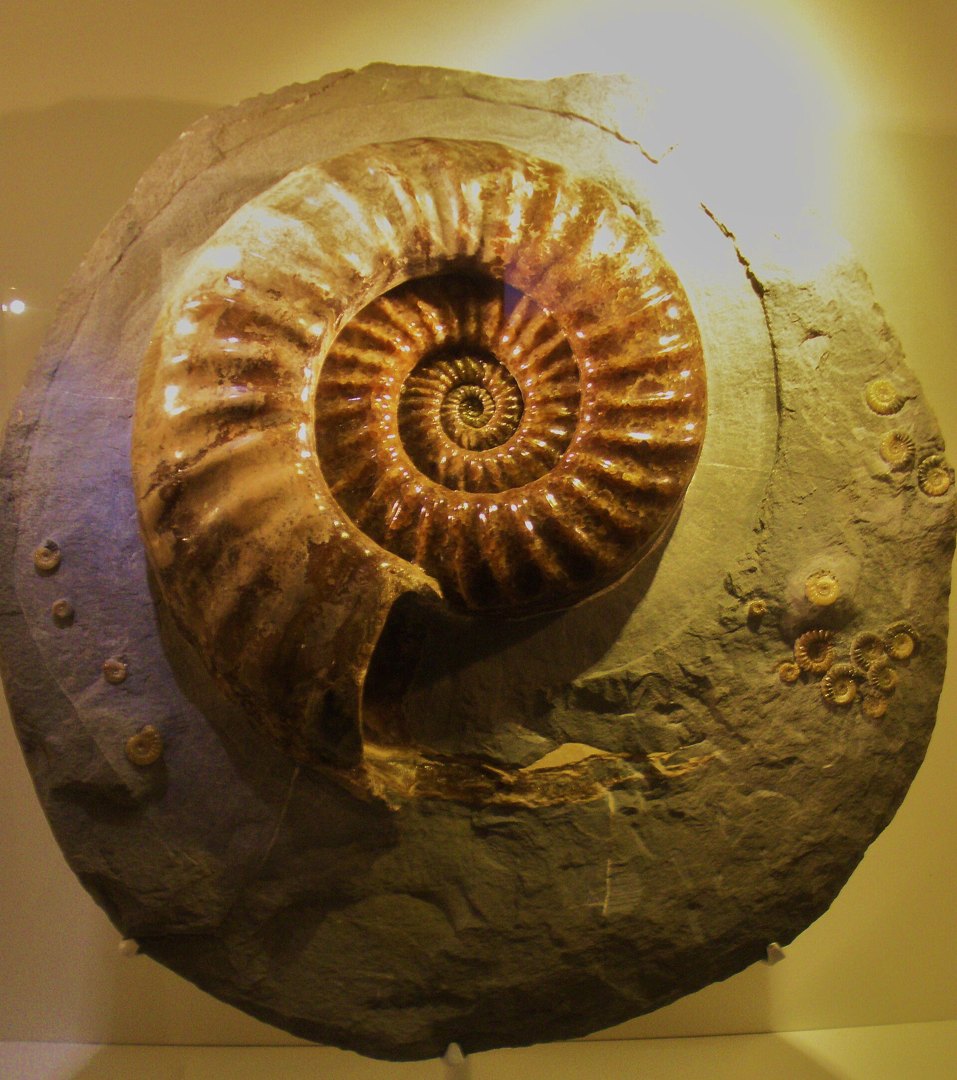
What survives
Real observation
Photograph of a real ammonite fossil. Wikimedia Commons.
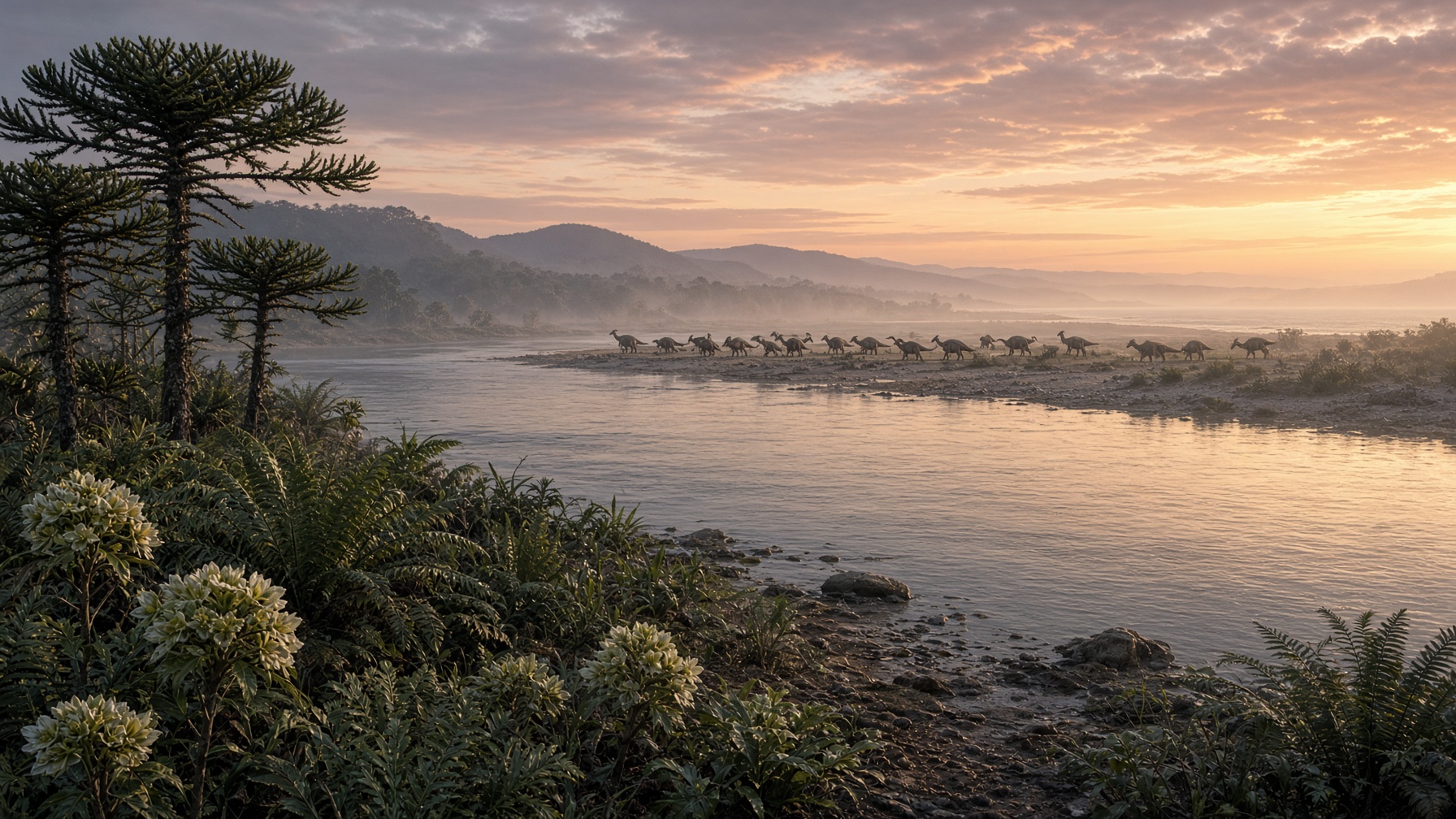
What we reconstruct
Drawing. Not a photograph.
What the fossil tells us
A coiled shell of a swimming cephalopod. Chambers. A record of Mesozoic seas.
What we reconstructed
We reconstruct a living animal in open water, related to squid and nautilus, gone at the K-Pg boundary.
Still uncertain
Soft body shape and color pattern are inferred, not photographed.
Keep looking
How would we know? Open only if you want the evidence.
Keep looking · The crater
Chicxulub, on the Yucatán Peninsula, is the impact structure. The iridium layer can be found far from Mexico. The Earth kept a record even where no one was watching.
Keep looking · Recovery takes time
Ferns often come back first. Forests take longer. New large animals take much longer. Empty space in an ecosystem is not a vacancy that fills overnight.